

A Breakthrough for PVC Pipe: Bio-based PVC Leads a Sustainable Future
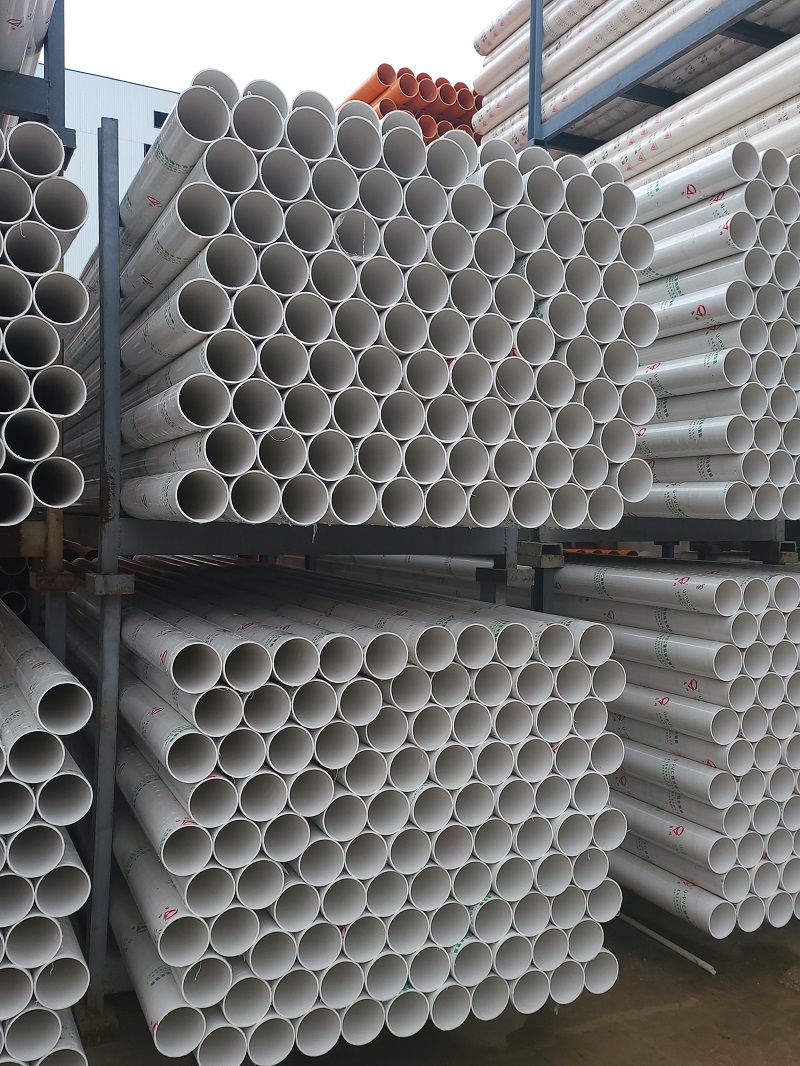
Industry news: the green transition speeds up
As global carbon-neutrality goals advance, the plastic pipe industry is undergoing profound change. Plastics Pipe Association reports that the market share of bio-based PVC pipe grew 47% year on year in 2023, making it one of the fastest-growing segments. The innovative material uses renewable plant resources such as sugarcane and corn starch as part of its feedstock, sharply reducing dependence on conventional petroleum-based raw materials.
Technology frontier: smart piping systems emerge
Smart monitoring PVC pipe is changing how infrastructure is managed. The new generation integrates micro-sensors that track pressure, flow, temperature and structural integrity in real time. Amsterdam's municipal works have deployed such systems across the network, lifting leak-warning accuracy in the water supply grid to 98% and cutting water loss by about 25% a year.
Material innovation: high-performance compounds
At the 2024 international building materials exhibition, several leading companies showed fourth-generation modified PVC pipe, with breakthroughs including:
Extreme-temperature resistance: the working range now extends from -40°C to 100°C
Self-healing: microcapsule technology lets the pipe repair small cracks on its own
Antimicrobial coating: a silver-ion coating on the inner wall inhibits microbial growth, particularly suited to healthcare and food processing
Standards upgrade: global safety rules tighten
The International Organization for Standardization (ISO) has released the new ISO 22391-2024 standard, raising requirements on key indicators such as long-term hydrostatic strength and environmental stress cracking for PVC pipe. The European Union has also updated its construction products regulation, requiring that from 2025 all PVC pipe in new buildings contain at least 70% recycled material.
Market trends: applications diversify
New application scenarios are taking shape:
Hydrogen infrastructure: dedicated hydrogen-embrittlement-resistant PVC pipe supports green energy transport
Vertical farming: lightweight transparent PVC pipe is an ideal choice for indoor vertical farms
Modular construction: prefabricated integrated pipe units cut on-site construction time by more than 60%
Marine engineering: salt- and alkali-resistant deep-sea pipe supports offshore wind and aquaculture
Recycling revolution: a closed loop takes shape
The European Plastic Pipes Manufacturers Association announced the launch of its " pipe-to-pipe " recycling programme, aiming to recycle and remanufacture 50% of PVC pipe by 2026. The new technology grinds old pipe for direct use in the core layer of new pipe, cutting energy consumption by up to 70%.
Innovation at Chinese companies
Leading companies such as Kangxiong Plastics, China Lesso and Yonggao have all reported significant progress recently:
Kangxiong Plastics has launched the world's first bamboo-fibre reinforced PVC pipe, raising flexural strength by 40%
Lesso Group has built Asia's first photovoltaic-integrated PVC pipe production line, achieving carbon neutrality in production
Yonggao has developed an earthquake-resistant PVC pipe system that passed national seismic testing
Global market forecast
According to Grand View Research, the global PVC pipe market is expected to grow from USD 68.7 billion in 2023 to USD 102.4 billion by 2030, a compound annual growth rate of 5.8%. Asia-Pacific will keep the largest share, with India and Southeast Asian countries among the fastest-growing markets.
Outlook: digitalisation and sustainability together
Industry experts note that PVC pipe is moving in two core directions: first, full-lifecycle digital management, with traceability from production through installation to maintenance; second, deeper circular economy practice, achieving efficient material recovery and high-value reuse.
Driven by both technological innovation and environmental requirements, PVC pipe — a long-established product — is finding new vitality, offering smarter, greener solutions for global infrastructure and sustainable development.